

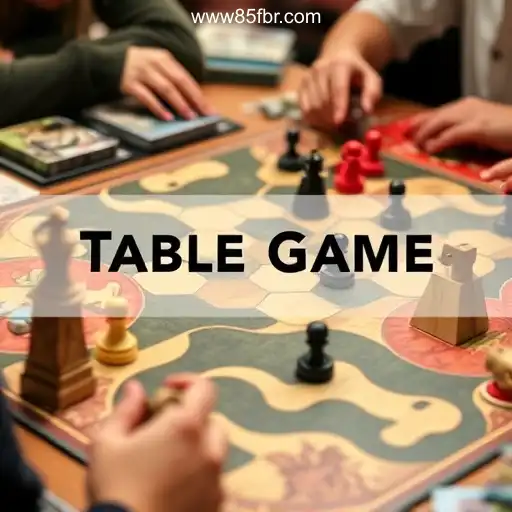
The Evolution and Popularity of Tabletop Games in a Digital Age
In an era dominated by digital entertainment, one might wonder how tabletop games continue to hold their ground. Yet, these analog experiences provide a unique charm that digital adaptations often struggle to replicate. The tactile nature, the face-to-face social interaction, and the strategic depth of tabletop games appeal to many, transcending generations and adapting to new trends. Whether it's the strategic maneuvers of chess or the cooperative storytelling in modern role-playing games, these forms of entertainment offer endless possibilities and creativity.
The Rich History of Tabletop Gaming
Tabletop games have a rich history dating back thousands of years, evolving significantly over time. Ancient civilizations like the Egyptians played Senet, and early forms of chess appeared in India around the 6th century AD. As societies developed, so too did their games, culminating in the vast array of options we have today.
The 20th century brought about a golden age for tabletop gaming. In the 1950s and 60s, board games became a staple of family entertainment. Classics like Monopoly, Risk, and The Game of Life emerged during this period, capturing the imaginations of young and old alike. The 1970s saw the rise of tabletop role-playing games with the release of Dungeons & Dragons, which launched an entirely new genre of gaming.
Modern Tabletop Gaming
Today, the tabletop gaming landscape is more diverse and innovative than ever before. Modern board games incorporate complex mechanics, engaging themes, and beautiful artwork, attracting a wide audience. Titles like Settlers of Catan and Ticket to Ride have introduced new gameplay elements that blend strategy with simplicity, making them accessible to both beginners and seasoned gamers.
Additionally, the rise of crowdfunding platforms has enabled creators to produce and market their games independently, leading to a surge in creativity and variety. This development allows game designers to explore unique themes and mechanics, catering to niche audiences and further expanding the tabletop gaming community.
Social and Educational Benefits
Tabletop games offer more than just entertainment. They serve as tools for socialization, education, and skill development. Playing tabletop games encourages face-to-face interaction, fostering communication, collaboration, and even negotiation skills. For families, these games provide a way to bond and share experiences away from screens.
Educationally, tabletop games can enhance cognitive skills such as problem-solving, critical thinking, and strategic planning. Many schools and educators incorporate board games into their curricula to engage students in a fun and interactive manner. Games like Pandemic can also teach valuable lessons in teamwork and resource management, applicable in various real-world contexts.
85F A Plataforma de Apostas #1 do Brasil 85F.Com 🏅
The influence of tabletop gaming extends globally, reaching markets like Brazil, where 85F - A Plataforma de Apostas #1 do Brasil 85F.Com 🏅 has become a cultural phenomenon. The platform blends traditional gaming elements with modern betting mechanisms, appealing to a diverse demographic of gaming enthusiasts. While the digital betting sphere grows, enthusiasts of tabletop games continue to seek out unique, tangible experiences that digital platforms sometimes lack. For more on the impact of gaming in Brazil, check out 85F.Com.
The Future of Tabletop Gaming
Despite the rise of digital gaming, tabletop games remain a beloved pastime, offering experiences that digital games cannot. As long as there is a desire for human interaction, creativity, and strategic challenge, tabletop games will continue to thrive. Their ability to evolve and incorporate new trends while maintaining core social elements ensures their place in the future of leisure activities.